



Pneumatic Grease Pump Not Working? Do These 3 Things First
A pneumatic grease pump plays an important role in keeping industrial equipment, machinery bearings, vehicle components, and mechanical assemblies properly lubricated. When a pneumatic grease pump stops working, delivers insufficient grease, or operates inconsistently, the resulting lubrication interruption can increase friction, accelerate component wear, and cause unexpected maintenance downtime.
Fortunately, not every pneumatic grease pump malfunction indicates a major mechanical failure. Some problems result from insufficient compressed air, an empty grease container, air pockets inside the suction system, clogged filters, or improper equipment setup. Identifying these conditions before attempting repairs can save time and help prevent unnecessary component replacement.
First, check these 3 things:
- Check the compressed air supply: Confirm that the compressor, air regulator, shut-off valve, and air hose are functioning correctly. Compare the actual inlet pressure with the manufacturer's operating requirements.
- Inspect the grease supply: Make sure the container contains sufficient grease, the suction tube is correctly positioned, and the follower plate can move freely.
- Check for obvious leaks and blockages: Inspect visible fittings, hoses, dispensing valves, and connections for grease leakage, air leakage, kinks, or physical damage. Isolate and depressurize the system before any servicing.
Before performing maintenance, follow the equipment manufacturer's complete pressure-relief procedure. Shut off and isolate the compressed air supply, relieve trapped lubricant pressure using the designated controls, and verify that the system is depressurized. High-pressure grease can penetrate the skin and cause a serious injection injury. Never inspect a suspected leak with your hands, and never loosen a pressurized hose to search for a blockage.
What Is a Pneumatic Grease Pump and How Does It Work?
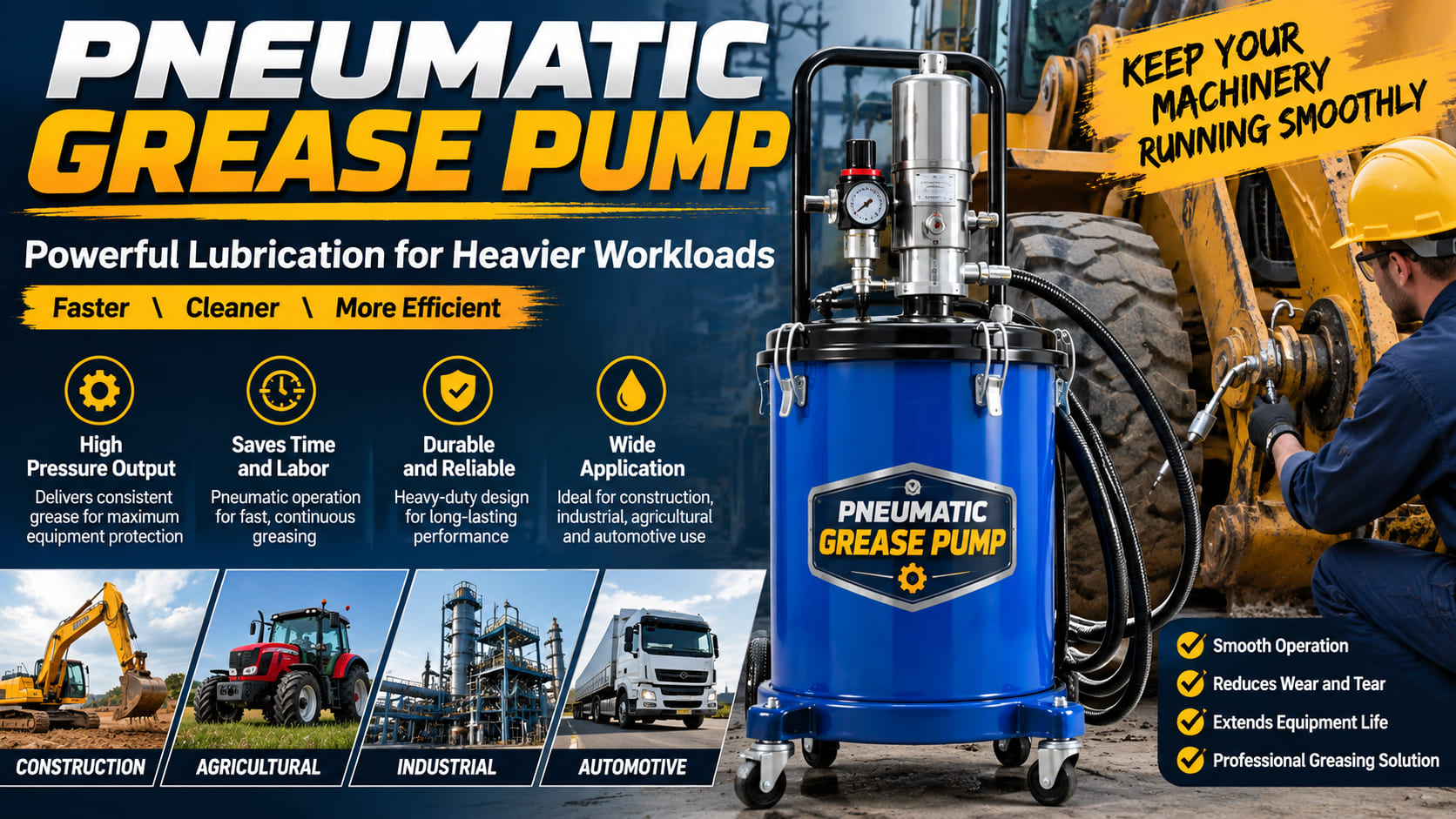
A pneumatic grease pump is an air-powered lubrication device designed to transfer grease from a container to machinery components through a pressurized delivery system. Instead of relying on manual pumping, it uses compressed air to operate a reciprocating mechanism that draws grease into the pumping chamber and forces it toward a dispensing valve or lubrication line.
Pneumatic grease pumps are commonly used in automotive repair workshops, manufacturing facilities, heavy equipment maintenance operations, agricultural machinery servicing, and industrial production environments. Their main advantage is the ability to deliver grease efficiently and repeatedly, reducing the physical effort associated with manual lubrication.
Main Components of a Pneumatic Grease Pump
A typical pneumatic grease pump system includes an air motor, compressed air inlet, regulator, grease pumping assembly, suction tube, grease container, follower plate, high-pressure grease hose, and dispensing gun. Each component performs a specific function, and failure in any part of the system may affect grease delivery.
- Air motor: Converts compressed air energy into reciprocating mechanical movement.
- Air regulator: Controls inlet air pressure within the manufacturer's specified range.
- Pump tube: Draws grease from the container into the pumping mechanism.
- Follower plate: Helps maintain grease contact with the suction inlet and reduces air pocket formation.
- Grease hose: Transfers pressurized lubricant toward the dispensing point.
- Dispensing valve: Controls the delivery of grease into the required lubrication fitting or component.
Understanding Pneumatic Grease Pump Pressure Ratios
Pneumatic grease pumps are available with different nominal pressure ratios, such as 40:1, 50:1, and other configurations. The pressure ratio describes the relationship between compressed air inlet pressure and the theoretical lubricant output pressure. For example, a nominal 50:1 pump operating at 80 psi inlet air pressure has a theoretical pressure multiplication of approximately 4,000 psi. Actual behavior depends on pump design, stroke conditions, operating losses, and manufacturer specifications.
Higher output pressure does not automatically mean better lubrication. Every hose, coupling, valve, fitting, and connected component must be rated for the pressure it may experience, including possible maximum or stall pressure. Never assume that a nominal pressure ratio alone establishes the system's safe operating limit.
Common Pneumatic Grease Pump Problems and Causes
Pneumatic grease pump problems can appear in several ways. The pump may not start, may cycle without delivering grease, may produce insufficient output, or may continue operating after the dispensing valve has been closed. Understanding the difference between these symptoms is essential for accurate troubleshooting.
| Possible Cause | How to Identify It | Recommended Action |
|---|---|---|
| Insufficient air pressure | Pump does not start or operates slowly. | Verify supply pressure and air flow against the manufacturer's requirements. |
| Empty grease container | Pump cycles but grease delivery stops. | Check grease level and replace or refill the container. |
| Air pockets in grease | Irregular output or failure to prime after container replacement. | Follow the manufacturer's approved priming procedure. |
| Blocked grease line | Reduced delivery or pressure buildup without expected flow. | Isolate and fully depressurize before qualified inspection or cleaning. |
| Worn seals | Visible leakage, loss of pressure, or repeated cycling. | Have a qualified technician replace the affected seals. |
| Contaminated air supply | Inconsistent air motor movement or recurring internal sticking. | Inspect air filtration and moisture separation equipment. |
| Grease too thick or too cold | Delivery becomes slow in low-temperature operating conditions. | Confirm lubricant compatibility, grade, and permitted operating temperature. |
| Damaged air motor | Motor stalls, leaks air continuously, or fails to cycle. | Stop operation and arrange professional inspection. |
These symptoms provide useful diagnostic clues, but they do not confirm a failure by themselves. For example, a pneumatic grease pump that runs continuously may have an empty container, an air pocket, an external leak, or damaged internal valves. A proper diagnosis requires checking the system in a logical sequence rather than immediately replacing the pump.
7-Step Pneumatic Grease Pump Troubleshooting Process
Troubleshooting a pneumatic grease pump should begin with external conditions before moving toward internal mechanical components. This approach helps maintenance personnel identify common problems while minimizing unnecessary disassembly and equipment downtime.
Step 1: Verify the Compressed Air Supply
Compressed air is the primary power source of a pneumatic grease pump. If the air supply is interrupted or insufficient, the pump may stop operating completely or produce weak and inconsistent strokes.
Check the compressor operating condition, regulator reading, air shut-off valve position, and visible air hose connections. A pressure reading at the compressor does not necessarily represent the pressure available at the pump during operation. Excessive pressure drop, restricted hoses, or insufficient compressor capacity can reduce performance.
Compare the inlet conditions with the pump's instruction manual. Do not increase air pressure beyond the manufacturer's rated limits in an attempt to force the pump to operate.
Step 2: Inspect the Grease Container and Follower Plate
A pneumatic grease pump cannot maintain consistent delivery when the grease supply is depleted or disconnected from the suction inlet. Inspect the container level and confirm that the pump tube is correctly positioned according to the equipment design.
If the pump uses a follower plate, verify that the plate has not become tilted, obstructed, or trapped against a damaged container wall. A poorly positioned follower plate can allow air pockets to form and interrupt the grease feed.
Container replacement should follow the manufacturer's servicing procedure. Prevent dirt, packaging fragments, and other foreign material from entering the grease supply during the changeover.
Step 3: Identify Air Pockets and Priming Problems
Air trapped inside the suction tube or grease supply can prevent proper priming. This issue commonly appears after replacing a grease drum, installing a new pump, or allowing the lubricant container to run empty.
Typical symptoms include rapid pump cycling with little or no grease output, interrupted delivery, or inconsistent lubrication flow. Some systems provide manufacturer-approved priming or venting procedures to remove trapped air.
Follow the exact priming instructions for the installed pump model. Never attempt to release trapped air by loosening an unverified high-pressure connection. If the system cannot be primed safely or consistently, seek professional assistance.
Step 4: Examine Grease Hoses and Dispensing Components
A grease delivery obstruction may prevent lubricant from reaching the intended lubrication point even when the air motor is operating correctly. Potential restrictions include damaged hoses, contaminated dispensing valves, blocked fittings, and foreign material inside the delivery path.
Begin with a visual inspection for external damage, deformation, leakage, or kinking. If a blockage is suspected, stop operation and follow the complete pressure-relief procedure before allowing a qualified technician to inspect the affected component.
Never use excessive air pressure to force grease through a suspected blockage. Doing so can overload a hose or fitting and increase the risk of a hazardous high-pressure discharge.
Step 5: Check Air Quality and Lubricant Compatibility
Poor compressed air quality can affect pneumatic grease pump reliability. Moisture, dirt, and oil contamination may interfere with air control components, particularly in facilities where compressors operate continuously or air filtration is neglected.
Inspect air filters, moisture separators, and maintenance units according to their service procedures. Whether an air-line lubricator is required depends on the pump design. Adding oil to the air supply without manufacturer approval may damage seals or interfere with internal lubrication.
Grease compatibility is equally important. Lubricants have different consistencies and operating temperature requirements. Grease that becomes excessively stiff in cold conditions may be difficult to pump, while incompatible grease mixtures can cause changes in consistency and lubrication performance.
Step 6: Inspect for Air and Grease Leakage
Pneumatic grease pumps contain seals, valves, and moving mechanical parts that may wear over time. Damaged sealing components can cause air leakage, grease leakage, reduced pressure, or continuous cycling when the dispensing valve is closed.
Visible grease accumulation around fittings or pump components may indicate a leak, although some residue can also result from previous maintenance. Record the location and operating conditions associated with the suspected problem.
Internal seal inspection and replacement should be performed only by authorized or qualified personnel using compatible replacement parts. Components must never be opened while the system is pressurized.
Step 7: Evaluate Pump Performance and Decide on Repair
After confirming the external air supply, grease level, lubricant compatibility, and delivery components, consider whether the remaining symptoms suggest internal pump failure.
Repeated stalling, abnormal cycling, excessive air consumption, and continued grease leakage may indicate worn internal valves, air motor damage, or deteriorated pumping components. At this stage, professional diagnostic work is generally more appropriate than repeated trial-and-error adjustments.
Before requesting service, record the model number, operating air pressure, lubricant specification, approximate service age, and observed symptoms. Providing this information allows a maintenance technician or equipment supplier to identify likely repair requirements more efficiently.
When Should You Contact a Professional Technician?
While basic external inspections can help identify pneumatic grease pump problems, certain symptoms require trained personnel. Air-driven lubrication equipment can generate extremely high grease pressures, making internal repairs potentially hazardous without suitable procedures and tools.
Stop operation and request professional assistance when:
- The pump fails to operate despite a verified and suitable air supply.
- The air motor produces unusual knocking, grinding, or repeated stalling.
- Grease leaks from an unknown location or a high-pressure hose appears damaged.
- The pump continues cycling when the dispensing valve is closed.
- Repeated priming attempts do not restore consistent grease delivery.
- Internal valves, seals, or piston components require replacement.
- System pressure cannot be safely relieved or verified.
If grease penetrates the skin, seek emergency medical attention immediately, even when the injury looks like a small puncture. High-pressure injection injuries can cause severe tissue damage and require urgent specialist evaluation.
For industrial operations, it is also important to consider the consequences of equipment downtime. If a lubrication system is connected to production machinery or critical bearings, continued operation without adequate lubrication may cause further mechanical damage. Maintenance decisions should follow the machinery manufacturer's lubrication and shutdown requirements.
Pneumatic Grease Pump Maintenance and Prevention Tips
Preventive maintenance is one of the most effective ways to improve pneumatic grease pump reliability. Regular inspections help identify developing problems before they interrupt lubrication operations or cause more expensive equipment failures.
1. Maintain a Clean Compressed Air Supply
Inspect the air filtration system regularly and remove accumulated condensate according to the equipment manufacturer's instructions. Clean air reduces the likelihood of contamination-related problems inside the air motor and control valves.
2. Use the Correct Grease Specification
Select a lubricant that satisfies both the machinery's lubrication requirements and the grease pump's pumping capabilities. Consider NLGI consistency grade, operating temperature, lubricant compatibility, and environmental conditions. Do not mix different greases unless compatibility has been confirmed.
3. Keep Grease Containers Clean
Protect grease containers from dust, moisture, metal particles, and foreign materials. Contamination can obstruct the suction system, damage internal components, and compromise the quality of the lubricant delivered to machinery.
4. Inspect Hoses and Fittings
Check grease hoses for visible wear, abrasion, sharp bends, cracking, and connection damage. Replace defective components with manufacturer-approved parts that satisfy the required pressure ratings. Never attempt to repair a damaged high-pressure grease hose with temporary tape, clamps, or unauthorized fittings.
5. Establish a Preventive Maintenance Schedule
Maintenance intervals should reflect operating hours, lubricant type, application frequency, equipment condition, and environmental exposure. A heavily used industrial grease pump may require more frequent inspections than a workshop pump used occasionally.
Keep a maintenance record covering service dates, grease changes, inspection results, observed pressure conditions, and replacement parts. Consistent documentation makes recurring problems easier to identify and supports more accurate repair-versus-replacement decisions.
How to Choose the Right Pneumatic Grease Pump for Your Application
When a pneumatic grease pump experiences repeated problems or no longer meets production requirements, replacing it with a more suitable model may be worth considering. However, selecting the right pump involves more than choosing the highest pressure rating or lowest purchase price.
Operating Pressure and Pressure Ratio
Select a pump that can provide sufficient grease pressure for the intended lubrication system without exceeding any component's safety rating. Long delivery lines, restrictive fittings, and certain lubrication points may require different pressure capabilities.
Grease Flow Rate and Duty Cycle
Different applications require different lubricant delivery rates. A vehicle service workshop may prioritize controlled dispensing, while a manufacturing facility may need a pump suited to repeated or higher-volume lubrication tasks. Review manufacturer flow specifications under realistic operating conditions.
Container Size and Installation Compatibility
Check whether the pump is compatible with the selected grease drum, bucket, or reservoir. Suction tube length, mounting arrangement, follower plate dimensions, and available installation space can affect both operational efficiency and maintenance convenience.
Spare Parts and Maintenance Support
Before purchasing, evaluate the availability of replacement seals, air motor repair kits, dispensing valves, hoses, and qualified service support. A pump with accessible technical documentation and replacement components can offer better long-term value than a model that is difficult to maintain.
Restore Reliable Grease Delivery and Reduce Equipment Downtime
A pneumatic grease pump is an essential part of an efficient lubrication system, and even minor delivery problems can affect equipment reliability. By checking compressed air conditions, grease supply, priming, lubricant compatibility, and visible delivery components, maintenance teams can identify many common problems without unnecessary mechanical disassembly.
The most important principle is to troubleshoot safely and systematically. If the problem involves high-pressure leakage, internal pump components, abnormal motor behavior, or uncertain pressure conditions, qualified professional service is the appropriate next step.
Need Help With a Pneumatic Grease Pump?
Whether you need pneumatic grease pump troubleshooting, replacement components, maintenance support, or assistance selecting a suitable lubrication system, consulting an experienced industrial equipment supplier can help you identify the correct next step.
Prepare your pump model, grease specification, air supply conditions, and failure symptoms before requesting a technical consultation or quotation.
Pneumatic Pneumatic Grease Pump Frequently Asked Questions
Q1: What is a pneumatic grease pump?
A pneumatic grease pump is an air-powered lubrication device that transfers grease from a container to machinery components through a pressurized delivery system. It is commonly used in automotive workshops, industrial maintenance, and heavy equipment servicing.
Q2: Why is my pneumatic grease pump not working?
Common causes include insufficient compressed air, an empty grease container, trapped air, blocked grease lines, contaminated filters, and worn internal components. Start with external inspections and follow the manufacturer's safety procedures before servicing.
Q3: Why does my pneumatic grease pump run but deliver no grease?
The grease supply may be empty, the suction inlet may contain trapped air, the follower plate may be obstructed, or a grease delivery component may be blocked. Confirm the supply and use the manufacturer's approved priming procedure.
Q4: What air pressure does a pneumatic grease pump need?
Required air pressure depends on the pump model, pressure ratio, and application. Always follow the manufacturer's specified operating range and never exceed the lowest pressure rating of the pump system components.
Q5: How do I remove air from a pneumatic grease pump?
Use the priming or venting procedure specified in the pump's operating manual. Confirm that sufficient grease is available and the follower plate is correctly positioned. Never loosen a pressurized connection to release trapped air.
Q6: Why does my pneumatic grease pump keep cycling?
Continuous cycling may indicate an empty grease supply, trapped air, leakage, or internal valve and seal problems. If the pump continues cycling with the dispensing valve closed, stop operation and arrange inspection.
Q7: Can I use any type of grease in a pneumatic grease pump?
No. Grease must meet the pump manufacturer's compatibility requirements and the lubricated equipment's specifications. Consider NLGI grade, operating temperature, and compatibility before selecting or changing lubricants.
Q8: How often should a pneumatic grease pump be maintained?
Maintenance frequency depends on operating hours, application conditions, lubricant characteristics, and manufacturer recommendations. Regularly inspect air filtration, hoses, seals, grease containers, and system performance.
Q9: Is a higher pneumatic grease pump pressure ratio always better?
No. A higher pressure ratio increases potential output pressure but may not be necessary for every application. Pump selection should consider required pressure, lubricant flow, component ratings, grease compatibility, and operating conditions.
Q10: When should I replace my pneumatic grease pump?
Consider replacement when repeated failures, worn internal components, unavailable repair parts, or insufficient performance make continued maintenance impractical. A qualified technician or equipment supplier can help compare repair costs and replacement options.
