



HEAVY DUTY DOOR Not Working? Check These 3 Things First
When a HEAVY DUTY DOOR stops operating correctly, immediately attempting mechanical adjustments or forcing the door open can increase damage and create serious safety hazards. A better approach is to begin with simple, non-invasive observations that help identify the likely problem without exposing employees to moving components.
Start With These 3 Checks:
- 1. Check the power and control indicators: Determine whether the control panel is illuminated, whether a fault code is displayed, and whether the facility has experienced a power interruption. Do not open electrical enclosures.
- 2. Look for visible obstructions or damage: From a safe distance, inspect the doorway for pallets, packaging materials, damaged panels, or objects blocking the travel path. Never enter the path of an unstable door.
- 3. Observe unusual movement or noises: Grinding sounds, jerky movement, uneven alignment, or unexpected stopping may indicate mechanical or safety-system problems requiring professional inspection.
If the door shows structural damage, a loose cable, a broken spring, or uncontrolled movement, stop using it immediately. Do not attempt to override safety interlocks or continue cycling the equipment. The primary objective of HEAVY DUTY DOOR troubleshooting is to identify the problem safely before selecting an appropriate repair method.
Common HEAVY DUTY DOOR Problems: Causes, Symptoms, and Recommended Actions
Heavy-duty industrial doors contain multiple components that must operate together, including structural panels or curtains, tracks, rollers, motors, control systems, counterbalance mechanisms, and safety devices. Problems in any of these areas can affect reliability. The following table helps distinguish common HEAVY DUTY DOOR failures.
| Possible Cause | How to Identify It | Recommended Action |
|---|---|---|
| Power Supply Problems | The control panel is inactive or the operator does not respond. | Check visible indicators and report electrical faults to a qualified technician. |
| Track Misalignment | The door moves unevenly, rubs against a guide, or becomes stuck. | Stop operation and arrange track alignment inspection. |
| Motor or Gearbox Failure | The motor hums, overheats, or fails to move the door. | Request professional electrical and mechanical diagnostics. |
| Sensor Malfunction | The door refuses to close, reverses unexpectedly, or displays a safety fault. | Check for visible obstructions and have the sensor system tested. |
| Damaged Springs or Cables | The door hangs unevenly, appears unsupported, or shows loose or broken cables. | Keep the area clear and contact a trained door technician immediately. |
| Worn Rollers or Bearings | Grinding noises, vibration, or irregular door movement occur. | Arrange inspection and replacement of worn components. |
| Panel or Curtain Damage | Visible dents, deformation, cracks, or damage following vehicle impact. | Remove the door from service until structural safety is assessed. |
| Control System Errors | Intermittent operation, error messages, or unexpected stopping. | Record the fault code and request qualified diagnosis. |
The correct repair depends on the door design. Rolling steel doors, sectional overhead doors, industrial sliding doors, and high-speed fabric doors may have different drive systems, safety mechanisms, and maintenance requirements. A standard industrial rolling door is not automatically suitable for intensive high-cycle operation. Door selection should reflect expected usage frequency, duty rating, opening dimensions, and environmental conditions.
HEAVY DUTY DOOR Troubleshooting: 7 Steps to Identify the Problem
This seven-step HEAVY DUTY DOOR troubleshooting process is intended for operators, facility managers, and maintenance coordinators performing external observations. It does not authorize electrical repairs, spring adjustment, track dismantling, or other hazardous maintenance work. Stop the assessment whenever the door appears unstable or unsafe.
Step 1: Verify Power and Control Panel Status
Start by checking whether the motor control unit has power and whether any warning indicator is illuminated. Many automatic HEAVY DUTY DOOR systems provide diagnostic indicators or error codes that help technicians locate electrical or operational faults.
Record the displayed information and confirm whether a facility-wide electrical interruption has occurred. Avoid repeatedly resetting the door or opening electrical panels. An unknown electrical fault should be investigated by qualified personnel.
Step 2: Examine the Door Opening for Obstructions
Industrial environments often contain pallets, forklifts, carts, loading equipment, and packaging materials. Objects near the doorway may interfere with door movement or trigger safety devices. From outside the movement zone, inspect the opening for visible obstacles.
If the door is mechanically damaged or partially suspended, do not attempt to remove objects beneath it. Secure the area and wait for an authorized technician. A heavy industrial door can create crushing hazards even when the motor is not running.
Step 3: Look for Track, Roller, or Guide Damage
Tracks and guides help control the movement of many HEAVY DUTY DOOR systems. Bent guides, damaged rollers, loose mounting points, or foreign materials can create friction and cause the door to move unevenly. Visible gaps, scraping marks, or a tilted door curtain may indicate alignment problems.
Do not loosen guide brackets or attempt to straighten loaded components. These parts may be subjected to substantial mechanical forces. Proper alignment should be performed using the manufacturer's service instructions.
Step 4: Identify Safety Sensor or Interlock Faults
Powered industrial doors may use photoelectric sensors, monitored edges, light curtains, or other protective devices. When an obstruction is detected, the control system may prevent closure, reverse the door, or display a fault. Sensors may also be affected by impact damage, contamination, misalignment, or wiring problems.
Only perform visual checks from a safe location. Never bypass an interlock, disconnect a protective device, or defeat a sensor to keep production moving. A faulty safety device requires diagnosis and verification before returning the door to normal operation.
Step 5: Observe Motor and Drive System Behavior
If the operator is responding but the HEAVY DUTY DOOR does not move correctly, the problem may involve the motor, gearbox, drive connection, brake, or mechanical load. Warning signs can include humming without movement, unusual vibration, abnormal operating speed, or repeated overload faults.
Repeatedly commanding a stalled door can worsen mechanical damage. Stop operation rather than attempting to force movement. Motor current testing, drive adjustments, and gearbox repairs should be completed by qualified service personnel.
Step 6: Check for Visible Structural Damage
Forklift collisions, loading equipment, strong winds, and repeated mechanical stress can damage industrial door panels, curtains, guides, or support structures. Even small visible deformation may affect alignment and increase operational loads. Look for dents, twisted framing, damaged seals, or a door that no longer closes evenly.
Impact damage should be evaluated before the door is used again. If the door includes a manufacturer-designed breakaway or self-resetting feature, only follow the approved procedure when the conditions for safe resetting are fully satisfied.
Step 7: Record the Fault and Arrange Professional Diagnosis
If the initial checks do not identify a safe, straightforward explanation, document the fault before contacting a service provider. Useful information includes the door type, manufacturer, approximate dimensions, operating frequency, error codes, visible damage, and when the failure first occurred.
For industrial facilities, this record supports more efficient maintenance planning and reduces the risk of repeated troubleshooting. The door should remain out of service whenever its stability, stopping function, or protective devices cannot be confirmed.
How Does Professional HEAVY DUTY DOOR Repair Work?
Professional HEAVY DUTY DOOR repair involves more than replacing the first visibly damaged part. Technicians must examine the relationship between the door structure, drive mechanism, control equipment, and safety systems. For industrial applications, repairs should also consider how the door is used throughout the working day.
- Initial assessment: Review the equipment history, operating environment, and reported symptoms.
- Safe isolation: Apply appropriate energy-control and workplace safety procedures before servicing hazardous components.
- Mechanical inspection: Evaluate the tracks, guides, rollers, supports, cables, counterbalance mechanisms, and structural panels where applicable.
- Electrical diagnostics: Inspect the motor, controller, switches, wiring, and associated drive equipment.
- Component repair: Replace or adjust damaged components according to approved manufacturer procedures.
- Safety verification: Test the relevant safety functions and confirm that the door operates correctly.
- Maintenance recommendations: Provide inspection findings and advice to reduce the likelihood of repeat failures.
The complexity and cost of HEAVY DUTY DOOR repair can vary significantly. Factors include the door type, required replacement parts, access conditions, installation height, electrical configuration, and degree of structural damage. For older systems, part availability and compatibility may also influence whether repair or replacement is the more practical option.
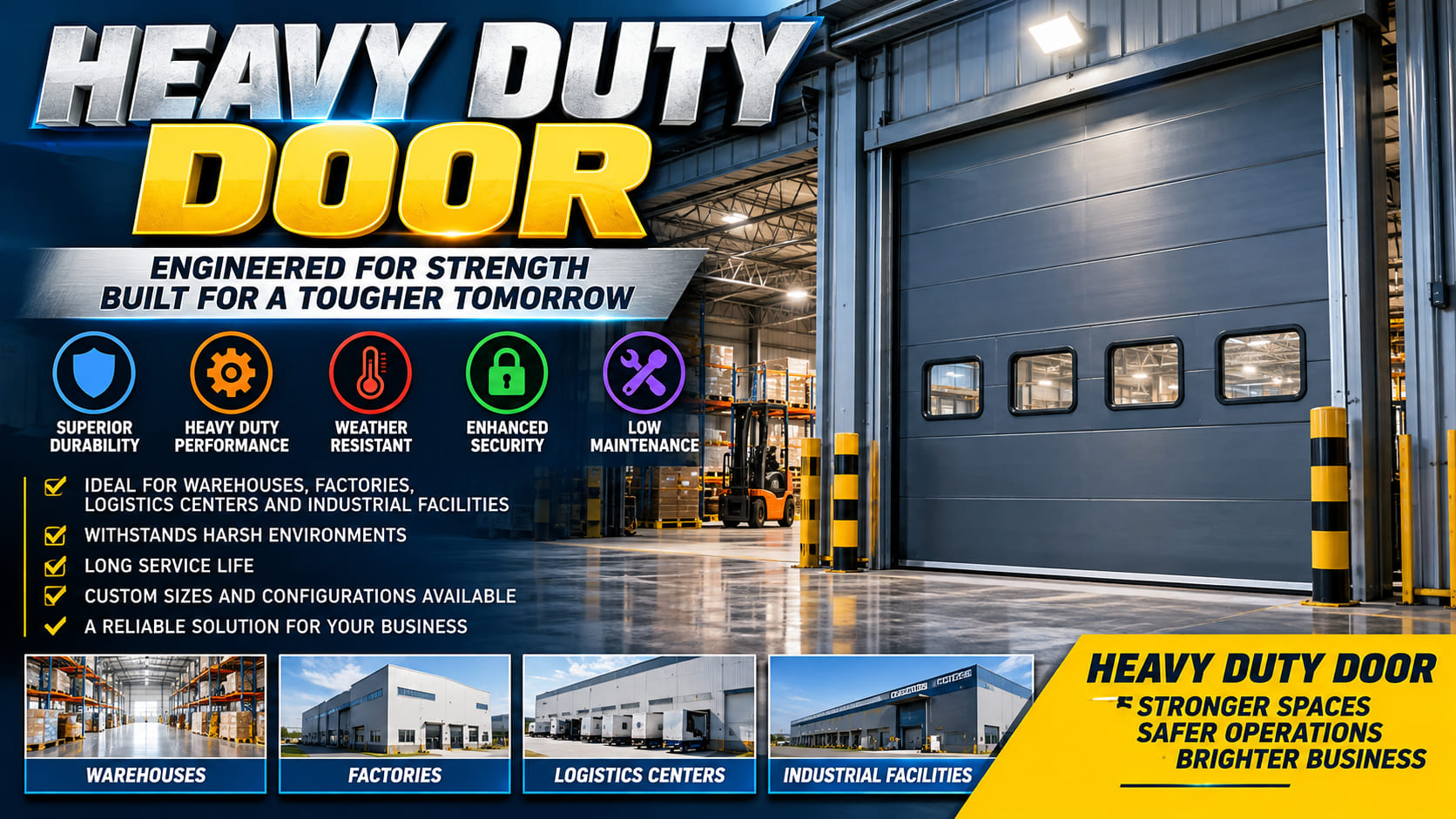
When Should You Call a Professional HEAVY DUTY DOOR Technician?
Some HEAVY DUTY DOOR failures present immediate risks to employees, visitors, vehicles, and surrounding equipment. These warning signs should not be treated as routine maintenance issues.
- The door drops unexpectedly or cannot remain securely supported.
- A spring, lifting cable, or structural support appears broken.
- The door moves unevenly or is visibly out of alignment.
- Safety sensors or protective edges fail to operate correctly.
- The motor produces smoke, sparks, burning odors, or abnormal heat.
- The door has been struck by a forklift or another industrial vehicle.
- The system repeatedly stops or reverses without a clear explanation.
- A fire-rated door or required emergency-access door cannot perform its designated function.
Never attempt to repair counterbalance springs, lifting cables, or energized motor components without the necessary training and equipment. Workplace machine guarding requirements also reinforce the importance of controlling hazards associated with moving machinery. Applicable requirements depend on the installation and jurisdiction.
HEAVY DUTY DOOR Maintenance Tips: How to Reduce Problems and Downtime
Preventive HEAVY DUTY DOOR maintenance helps facilities identify wear before it results in unplanned downtime. The ideal inspection interval depends on the equipment design, manufacturer recommendations, operating cycles, environment, and safety classification. A heavily used logistics doorway may require more frequent attention than an infrequently operated storage entrance.
1. Keep the Doorway Clear
Avoid storing pallets, carts, loose packaging, or other equipment near the operating path. Maintaining a clear doorway reduces accidental impact and helps protective sensors function as designed.
2. Schedule Regular Professional Inspections
Arrange periodic inspections of structural components, drive mechanisms, fasteners, guides, and safety devices. Qualified technicians can detect abnormal wear, loose components, or developing alignment problems before the door becomes unreliable.
3. Follow Approved Lubrication Instructions
Some industrial door components require periodic lubrication, while others use sealed bearings or materials that should not be lubricated indiscriminately. Using an unsuitable lubricant or applying it to the wrong surface can attract debris or interfere with operation. Follow the manufacturer's maintenance documentation.
4. Monitor Daily Operating Conditions
Facility personnel should report unusual noises, changes in operating speed, intermittent fault messages, or visible damage promptly. Early reporting allows maintenance teams to schedule inspections before a minor issue becomes a major failure.
5. Maintain Safety Devices and Access Controls
Safety sensors, emergency controls, and access systems should remain functional and unobstructed. Any suspected malfunction should be reported immediately. Testing and resetting should follow the manufacturer's approved procedure and site safety policy.
6. Match the Door to Its Operating Environment
A HEAVY DUTY DOOR used in a refrigerated warehouse may require different sealing, insulation, and condensation-management features from one installed at a high-traffic loading dock. Consider wind exposure, corrosion, temperature differences, forklift traffic, operating frequency, and maintenance accessibility when evaluating door performance.
7. Keep a Maintenance and Repair Log
Maintain records of inspections, repairs, part replacements, safety checks, and unusual operating conditions. These records help identify recurring faults, support preventive maintenance decisions, and assist in evaluating the service life of industrial door components.
HEAVY DUTY DOOR Repair and Maintenance: What Should You Do Next?
A malfunctioning HEAVY DUTY DOOR can interrupt warehouse operations, delay deliveries, compromise facility security, and expose personnel to avoidable safety risks. Identifying the likely cause through external observation is the first step, but hazardous mechanical and electrical repairs should always be performed by qualified professionals.
If the door is repeatedly failing, consider whether it is correctly specified for the operating frequency and environment. A system designed for occasional access may not perform reliably in a high-cycle production or distribution facility. Comparing duty ratings, safety features, service support, and lifecycle maintenance requirements can help determine whether repair or replacement is the better long-term decision.
Need Professional HEAVY DUTY DOOR Inspection or Repair?
Contact a qualified industrial door service provider to assess mechanical damage, electrical faults, safety components, or repeated operational failures. Before requesting service, prepare the door model, dimensions, location, fault symptoms, and maintenance history to support an accurate evaluation.
Request an inspection, documented diagnosis, and a clear repair quotation before authorizing non-emergency work.
HEAVY DUTY DOOR Frequently Asked Questions (FAQ)
Q1: What is a HEAVY DUTY DOOR?
A HEAVY DUTY DOOR is an industrial or commercial door designed for demanding operating conditions, such as frequent use, large openings, or exposure to mechanical stress. Common configurations include rolling steel, sectional overhead, sliding, and specialized industrial doors.
Q2: Why is my HEAVY DUTY DOOR not opening?
Possible causes include power interruptions, motor problems, control system faults, damaged tracks, or defective safety devices. Begin with external observations and contact a qualified technician if the cause cannot be identified safely.
Q3: Why does my industrial door stop halfway?
A door that stops halfway may have a sensor fault, mechanical obstruction, drive overload, alignment issue, or control system error. Repeated operation should be avoided until the problem is assessed.
Q4: How often should a HEAVY DUTY DOOR be serviced?
The appropriate maintenance interval depends on the manufacturer's requirements, operating cycles, environmental conditions, door design, and applicable regulations. High-traffic installations may require more frequent inspections than lightly used doors.
Q5: Can I repair a HEAVY DUTY DOOR myself?
Operators may perform basic visual checks from a safe location, but repairs involving springs, lifting cables, motors, electrical controls, or structural components should be handled by qualified professionals. Never bypass protective devices or attempt hazardous adjustments.
Q6: What causes unusual noises in a HEAVY DUTY DOOR?
Unusual noises may result from worn rollers, damaged bearings, track misalignment, loose components, or drive system problems. Grinding, scraping, or sudden impact noises should be investigated before continued operation.
Q7: What is the difference between a heavy-duty door and a high-speed door?
Heavy-duty describes a door's suitability for demanding loads or operating conditions, while high-speed refers to a door category designed for rapid operation. A high-speed door may also be heavy-duty, but the terms are not interchangeable.
Q8: What factors affect HEAVY DUTY DOOR repair costs?
Repair costs depend on the door type, damage severity, replacement components, installation height, site accessibility, labor requirements, and availability of compatible parts. A professional inspection is usually needed for an accurate quotation.
Q9: When should an industrial door be replaced instead of repaired?
Replacement may be appropriate when structural damage is extensive, parts are unavailable, repairs recur frequently, or the door no longer meets operational or safety requirements. The decision should consider long-term maintenance costs and facility needs.
Q10: What information should I provide when requesting HEAVY DUTY DOOR service?
Provide the door manufacturer, model, approximate dimensions, operating type, location, fault symptoms, error codes, maintenance history, and photographs taken from a safe position. This information helps the technician prepare for inspection.
